
ZCC-CT Cutting Tools · Precision turning
Cutting inserts for a mirror-like finish
Cermet inserts is a TiCN-based insert combining ceramic hardness and metal toughness. The name comes from ceramic + metal. In finish turning of steel, it can achieve a surface finish beyond that of carbide. Toksan stocks these ZCC-CT inserts.
Application → finish turning
Material → steel, stainless steel
Result → bright surface with low Ra
Material → steel, stainless steel
Result → bright surface with low Ra
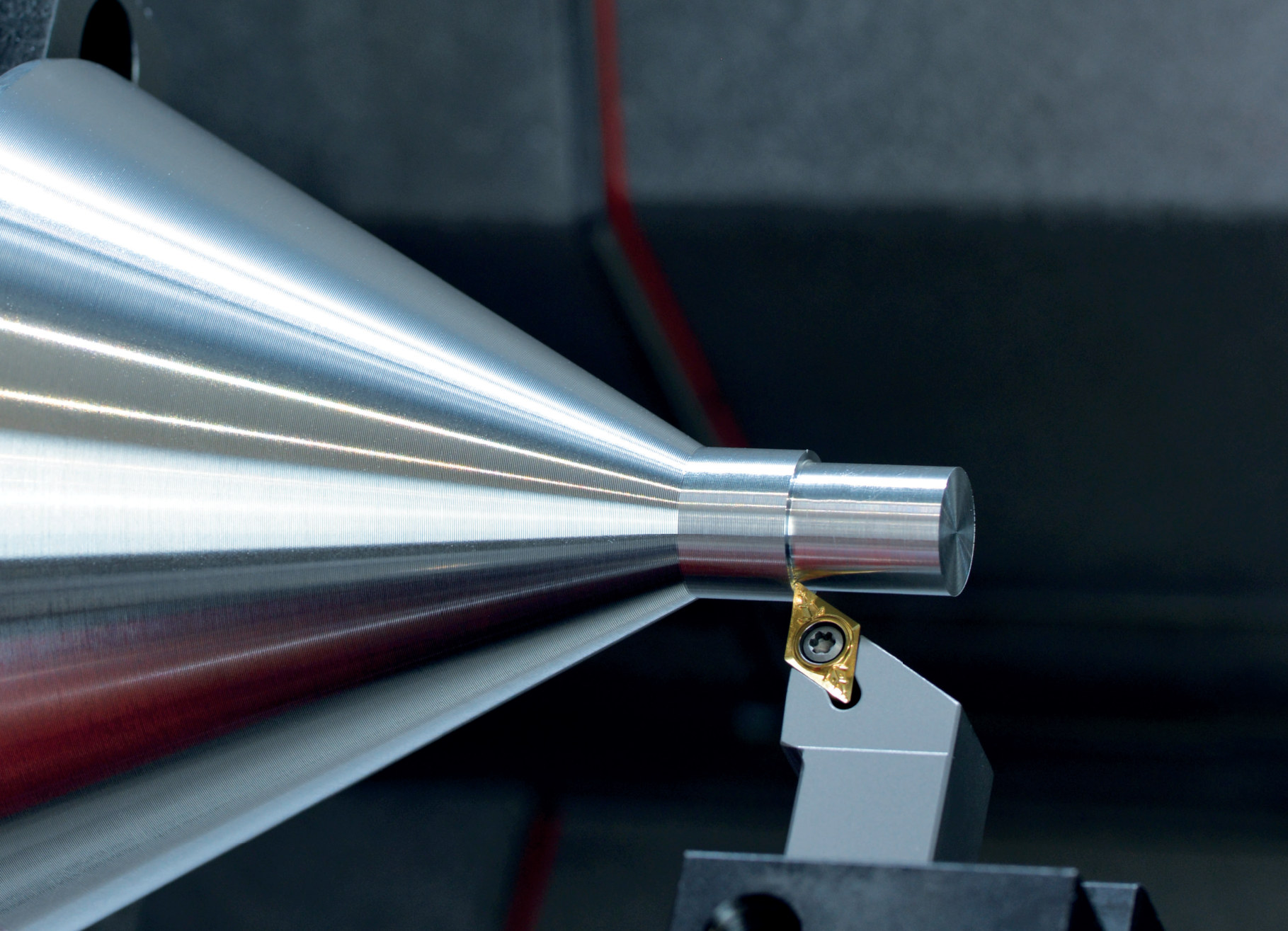
Cermet and carbide inserts compared
Conventional carbide inserts are based on tungsten carbide, whereas a cermet insert is based on titanium carbonitride (TiCN). It has higher hot hardness, less chemical adhesion to the machined surface (no built-up edge) and maintains a bright, burr-free surface for longer. Its lower impact resistance makes it less suitable for interrupted cuts and roughing. It is a finishing tool. For grade details, see ZCC-CT’s official grade table for further details.
| Criterion | Cermet | Coated carbide |
|---|---|---|
| Typical use | Finishing / light cuts | Roughing and medium machining |
| Surface finish | Very high (bright) | Good |
| Impact resistance | Limited | High |
| Tendency to form built-up edge (BUE) | Very low | Medium machining |
| Example ZCC-CT grade | YNT251 | YBC252 · YBG205 |
When is a cermet insert preferred?
Choose cermet for a bright turned finish without grinding, dimensional stability in series production and continuous cuts. For interrupted cuts, a casting skin or heavy passes, stay with a coated carbide turning insert .
Rule of thumb
Use carbide for roughing and cermet for the final one or two light passes. This reduces tooling cost and brings the surface finish closer to ground quality.
Frequently asked questions
Which materials can cermet inserts machine?
They give the brightest finish in unalloyed and low-alloy steels and are also used for finish passes on stainless steel. They are unnecessary for aluminium, where sharp YD101 carbide suffices, and are not preferred for hard cast iron.
What depth of cut is used?
Typically a shallow depth at medium to high cutting speed. Leave the last one or two light passes to cermet. Roughing with carbide and finishing with cermet is the most common approach.
How does the price compare with carbide?
The price per insert is close to standard carbide. The main savings come from potentially eliminating grinding and from predictable tool life. To calculate cost per part, see our cost guide for details.
Where can I buy genuine inserts?
Toksan has been ZCC-CT’s authorised distributor in Türkiye since 2004. We can help choose cermet or carbide for your application. For other families, see our cutting insert guide page.
Stock and price
Provide the workpiece material and required surface roughness (Ra). We will recommend an insert and confirm stock.