
Why do so many shops miscalculate cost per part? 📊
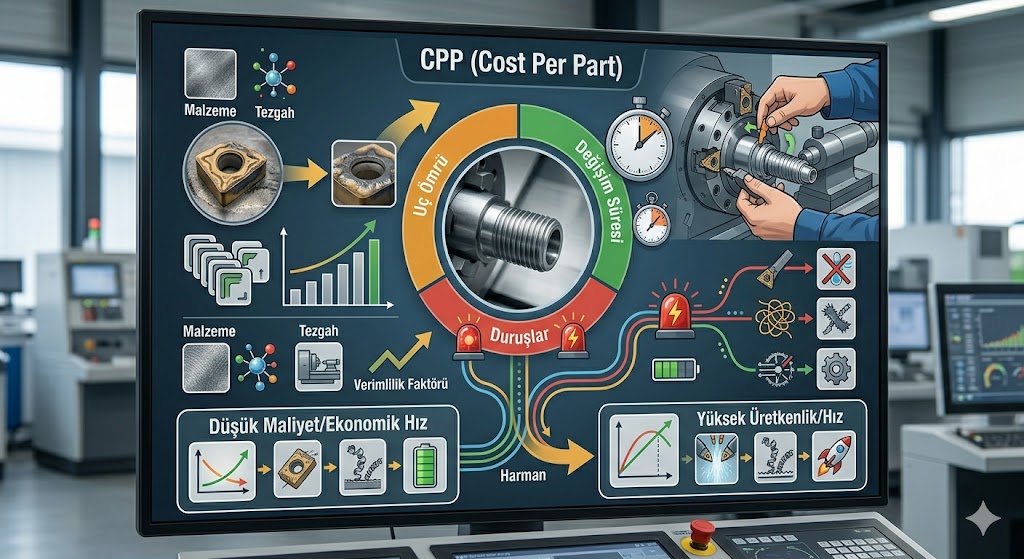
Many companies count only three items: raw material, cutting time and insert price. Yet parts incur costs outside the cut as well. Clamping, setting the datum, measurement, indexing an insert, cleaning up after tool breakage, clearing packed chips, planned tool adjustments, unplanned stops and first-part approval all take time. Even the short, repeated pauses while operators regain confidence in the machine add up. You pay for the spindle when it turns and when it stands still. 😅 Many companies measure only the former and overlook the loss during the latter. This explains much of the gap between a quotation and the actual cost.
Toksan’s turning page lists reliable chip control, long tool life and short machining time among the basic requirements for turning. All three affect cost directly. The same page considers maximum productivity, long service life and short machining times together in general turning. Their combined economic effect matters: a fast cycle with short insert life leads to frequent stops, while a slow cycle can waste machine time even if an edge lasts a long time. The best result usually comes from balancing the two ✨
Why can a low-priced insert still give a high cost per part? 🔍
This distinction matters in purchasing. 😊 Suppose one insert costs 120 TL and produces 20 parts per edge. Another costs 180 TL and produces 45 parts per edge. The first looks cheaper at a glance. The second may cost considerably less in use if it needs fewer changes, reduces operator intervention, holds dimensions for longer, lowers the risk of unexpected breakage and keeps the machine cutting for longer. The purchase price alone will not tell you the cost of production.
Toksan’s general engineering solutions emphasises maximum performance at minimum cost. Selecting the right product selection, with the geometry matched to the material group and operation. The price tag alone misses this point. It matters particularly in volume production, where small differences add up. 💥 Even a 30-second difference in when an insert is changed can amount to tens of minutes in a day, hours in a month and a significant difference in annual profitability.
| Cost item | Common mistake | Recommended approach |
|---|---|---|
| Insert cost | Looking only at the purchase price | Consider cost per edge alongside the number of parts produced. |
| Tool life | Assuming that longer tool life is always better | Determine the economic optimum in relation to cycle time. |
| Tool change | Ignoring it | Convert the minutes lost at each tool change into machine cost using the hourly rate. |
| Downtime | Treating downtime as a general loss without tracking it separately | Allocating planned and unplanned downtime per part |
| Effect of the toolholder | Assessing it independently of the insert | Account for how vibration and runout affect tool life, tolerances and finish. |
Insight 1. How do you calculate the basic cost per turned part? 🧮
A practical calculation for the shop floor uses the following approach:
Cost per part = direct machining cost + insert/edge cost + tool change time cost + share of planned downtime + share of unplanned downtime + allowance for quality and scrap risk
Here is the breakdown 😊 Convert the hourly machine, operator and overhead costs to a per-minute rate and multiply by actual cycle time for direct machining cost. For insert or edge cost, divide the cost of the insert or edge by the number of parts machined with that edge. Multiply change time by the same per-minute rate and allocate it over the parts. Planned downtime covers expected recurring losses such as tool preparation, first-part approval, presetting and chip cleaning during a shift. For unplanned downtime, use historical records to allocate losses from breakage, dimensional drift, tangled chips, alarms, poor finish and unexpected tool failures to the parts produced.
On the shop floor, I use this short formula 😌
Cost per part =
[(Cycle time + tool change time per part + downtime per part) × cost per minute]
+ (Cost per cutting edge ÷ number of parts per edge)
+ allowance for scrap and quality risk
The formula looks simple, but many firms lose most in the unrecorded time inside the first set of brackets, rather than in the second term. Toksan’s approach to services brings tool management, testing and demonstrations, regrinding and customer training together for a reason. Costs depend on how the process is managed as well as on the product itself.
Insight 2. How does insert life enter the cost calculation? 🔩
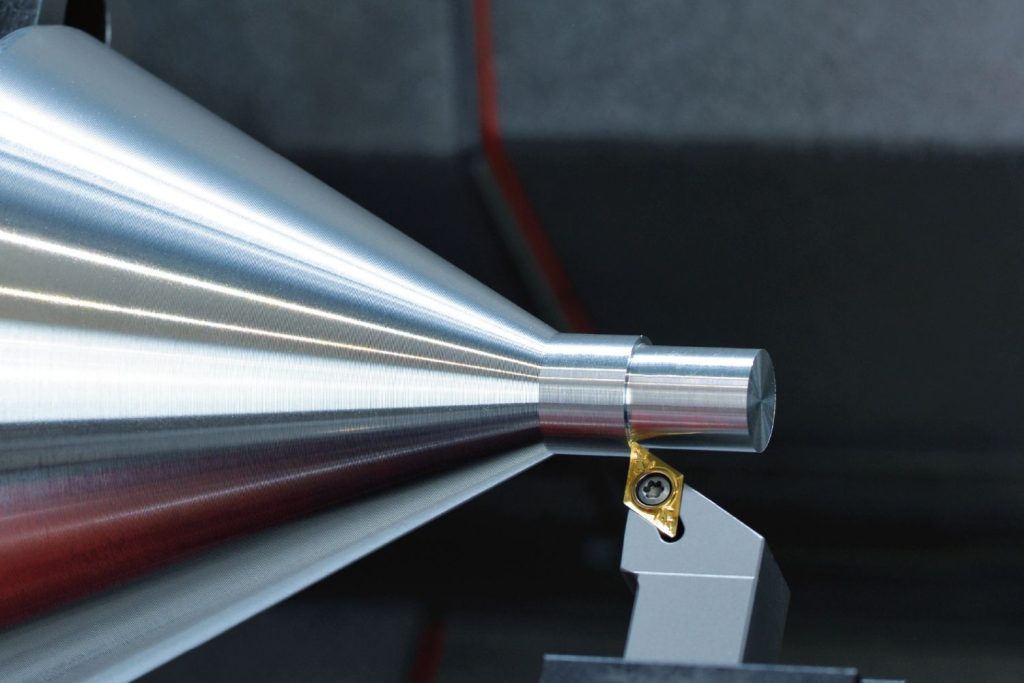
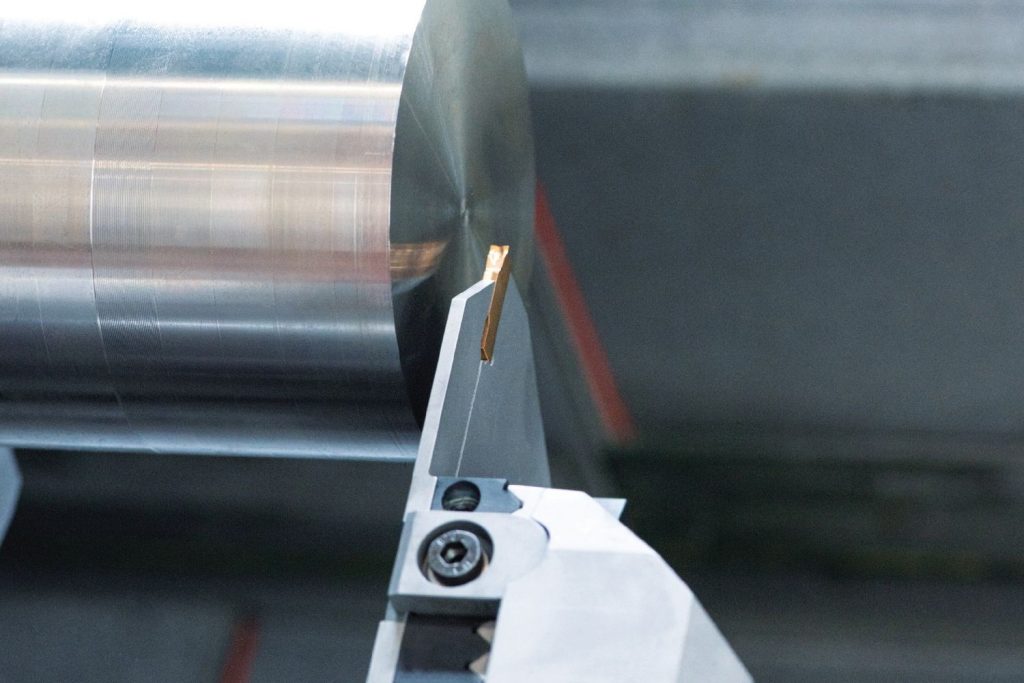
A common mistake is to stop at a figure such as “the insert lasts 60 minutes”. For costing, the real question is How many parts can one edge machine, and how stable are dimensions, tolerances and finish throughout that run? Suppose an insert can run for 60 minutes, but for the last 15 minutes the finish deteriorates, dimensions drift and the operator has to keep making corrections. Its economic life may then be 42 minutes rather than 60. 😊 Cost the job using the life you can reliably achieve in production. A catalogue value alone will miss this difference.
Toksan’s in turning applications considers reliable metal removal, long tool life and short machining time together. This reflects what economic tool life means in practice. A tool remains economical as long as it delivers stable, repeatable results, even if it could run longer before breaking. In rough turning, consider both the volume removed per edge and how reliably the edge prepares the part for finishing.
Consider a CNMG insert that produces 32 parts per edge. 👇 It costs 320 TL and has 4 usable edges, so each edge costs 80 TL. At 32 parts per edge, the insert cost alone is 80 / 32 = 2.50 TL per part. If the last 5 parts go out of tolerance and the insert is actually changed after 27, the true cost is 80 / 27 = 2.96 TL per part. A difference of 0.46 TL may seem small, but at 20,000 parts per month it amounts to 9,200 TL. Volume changes the significance of the figure. 😮
Insight 3. Why does tool change time matter as much as insert price? ⏳
A machine makes no parts during a tool change. On a CNC lathe, every idle minute has a direct cost. I think of insert changes as brief interruptions to a factory’s heartbeat 😊 Each one is short, but repeated across a shift, week or month they add up. If a change takes 90 seconds and you make 28 changes a shift, that is 42 minutes of lost production. At 20 TL per machine minute, tool changes alone cost 840 TL per shift. On that basis, a more stable insert that lasts longer and needs fewer changes can be the economical choice.
One of Seco’s production economics examples shows why insert indexing time should be allocated per part. With two minutes of cutting and two minutes for loading and unloading, one additional minute to index the insert adds 0.20 minutes per part when the edge lasts five parts. Counting the tool, machine and time together gives a clearer picture of total cost. In the workshop, those seemingly insignificant minutes can quietly eat into the margin. :contentReference[oaicite:0]{index=0}
Toksan’s customer training includes instruction in the proper use and maintenance of tools and how to get the best performance from them. This, too, belongs in the costing. Fast, correct and consistent tool changes depend on a standard process across the organisation as well as on operator skill.
Insight 4. How should downtime be included in the cost? 🚦
A costing that leaves out downtime is incomplete. 😊 I recommend separating planned from unplanned stops. Planned stops include tool presetting, checks at the start of a shift, first-part approval, chip clearing and tool offset corrections. Unplanned downtime includes tool breakage, tangled chips, alarms, a loose holder, a poor finish, parts outside tolerance and unexpected reclamping.
Use data from the last 1 or 3 months. Add up all downtime for the operation and divide by the number of parts produced to obtain average downtime per part. For example, 600 minutes of planned and unplanned downtime in a turning cell over a month and an output of 12,000 parts give 0.05 minutes, or 3 seconds, per part. At 25 TL per minute, that adds 1.25 TL to each part. In some operations the amount exceeds the insert cost. 😬
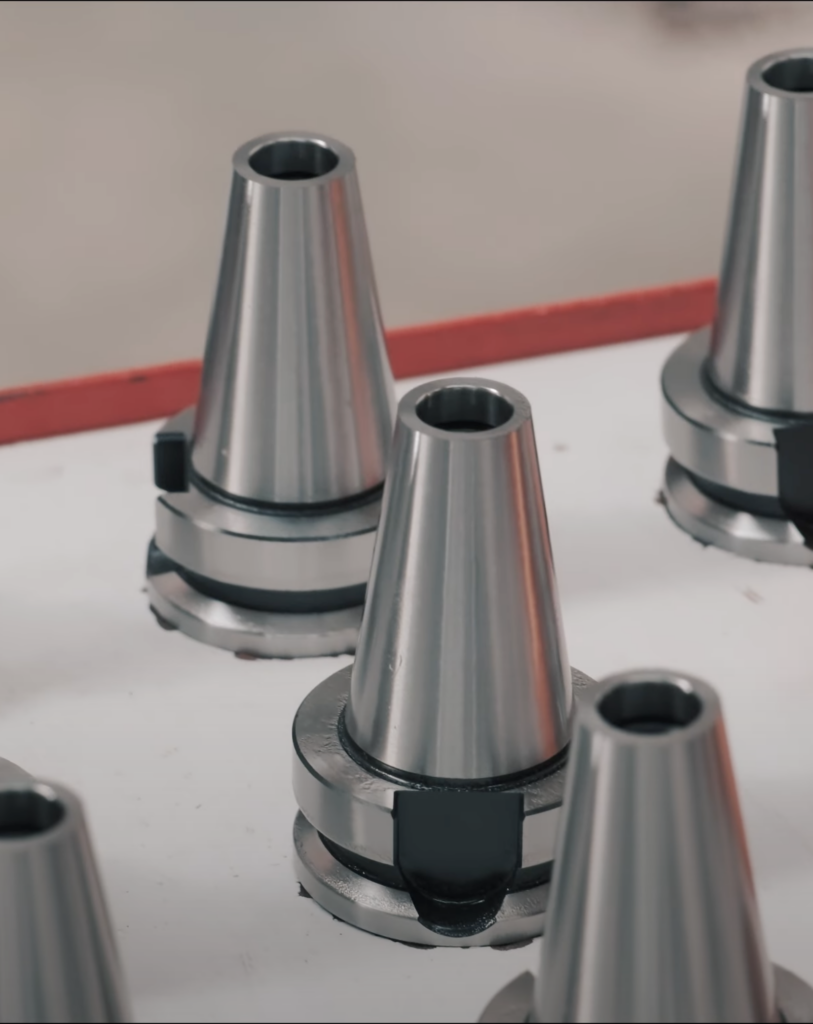
Toksan’s in toolholding and accessories explains that vibration, imbalance and misalignment reduce surface quality, shorten tool life and undermine dimensional accuracy. An unsuitable holder can therefore increase the risk of unplanned downtime as well as shorten tool life. The same page notes that proper clamping can reduce vibration, extend tool life and lower cost per part. Downtime costs frequently have their origin in mechanical stability. :contentReference[oaicite:1]{index=1}
Insight 5: How do you find the economic balance between tool life and cycle time? 🎯
The longest tool life is not always the most economical choice. Sandvik Coromant’s turning guidance explains how cutting speed, feed and depth of cut affect tool life, and how very low speed can promote built-up edges, blunt the cutting edge and damage the finish. Seco also notes that increasing speed can shorten machining time, but after a certain point more frequent tool changes and machine stops drive total cost back up. The economic optimum is the lowest point on the total cost curve. It need not coincide with maximum speed or maximum tool life. :contentReference[oaicite:2]{index=2}
I often compare it to a long drive 😊 Driving very slowly can save fuel but costs time. Driving very fast gets you there sooner but increases fuel consumption, tyre wear and risk. The economical speed is usually somewhere between the two. Turning is similar: excessive caution can waste machine hours, while overly aggressive cutting can leave the machine idle for an edge change every 10 minutes.
Toksan’s testing and custom tool manufacturing assesses material, stock removal, finish requirements and machine capacity together, and tests suitable geometries in the turning application. That is how the optimum can be found. Economic tool life is best determined by testing under the relevant conditions.
How do you calculate the actual cost per part? 🧾
Let’s work through a simple shop-floor example 😊 Suppose you are producing a shaft in series.
| Parameter | Value |
|---|---|
| Cutting time | 2.8 min/part |
| Clamping, unloading and measurement | 1.4 min/part |
| Machine, operator and overhead cost per minute | 18 TL/min |
| Insert price | 400 TL |
| Number of usable edges | 4 |
| Parts per cutting edge | 30 parts |
| Tool change time | 2 min |
| Total monthly unplanned downtime for this operation | 300 min |
| Monthly output | 6,000 parts |
Let’s calculate the cost:
1. Direct cycle cost
Total cycle time = 2.8 + 1.4 = 4.2 min
4.2 x 18 = 75.6 TL/part
2. Insert cost
Cost per edge = 400 / 4 = 100 TL
Cost per part for one edge = 100 / 30 = 3.33 TL/part
3. Cost of tool change time
2 min / 30 parts = 0.0667 min/part
0.0667 x 18 = 1.20 TL/part
4. Share of unplanned downtime
300 min / 6,000 parts = 0.05 min/part
0.05 x 18 = 0.90 TL/part
Total
75,6 + 3,33 + 1,20 + 0,90 = 81.03 TL/part
Now suppose improved geometry, a more rigid holder and better process control increase output from 30 to 42 parts per edge. Standardising tool changes cuts change time from 2 to 1.3 minutes, while unplanned downtime falls from 300 to 180 minutes per month. The same operation could then cost around 78 TL per part. A saving of 3 TL per part adds up to 18,000 TL per month at 6,000 parts, or 216,000 TL per year. 😎 💙
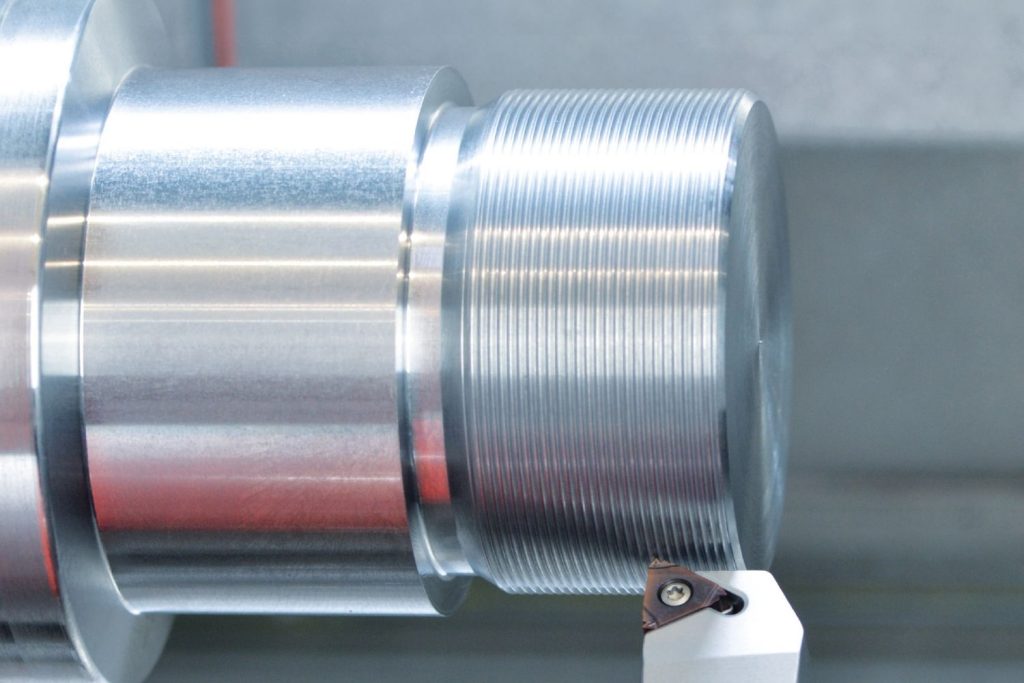
Sometimes the insert with the highest price delivers the best return 😊
I once saw a purchasing team propose an insert with a lower sticker price. It looked sensible, yet operators kept changing edges, quality staff wanted extra checks on the last parts and unplanned alarms interrupted the night shift. The supposed saving never showed up at month end. A closer study showed that time around the insert was the real opportunity. A more stable tool, a better holder, controlled changes and clearer training procedures reduced total cost. Manufacturing uncertainty can cost more than the product itself.
Toksan’s in HSS and carbide regrinding services also explains why correct regrinding helps preserve performance and lower cost per part. Similarly, training approach aims to extend tool life while reducing manufacturing costs. That reinforces the need to consider how tools are used when calculating costs, alongside what they cost to buy. :contentReference[oaicite:3]{index=3}
Diagram illustrating this topic 🧠
Choice of cutting insert
      ↓
Tool life / parts per edge
      ↓
Tool change frequency
      ↓
Machine downtime
      ↓
Actual cycle time
      ↓
Cost per part

At the same time:
Holder quality → vibration / runout → tool life, tolerance and unplanned downtime
Operator procedure → change time → lost production
Testing / training → more stable process → more predictable cost

What does a finished part actually cost once the insert price is included? ✅
To return to the starting question, insert life alone is not enough to calculate cost per part in turning. You need to know how many parts each edge produces, how consistently it holds tolerance over that life, how long the machine stops for a change, how consistent the change procedure is and how often unplanned stops occur. Only then can you see how all these factors affect cycle cost and the economics of production. 😊
Toksan’s approach to the application, turning products, testing and custom tooling support, toolholding systems and training show that reducing cost per part involves far more than substituting one product. It takes suitable tooling, sound clamping, reliable data, training and consistent practice. In short, Toksan approach aims to make production more predictable and more profitable as well as to supply longer-lasting inserts. 🚀
Sometimes the greatest saving comes from a process change that reduces downtime, shortens tool changes and makes tool life more predictable. A new price list may offer less. When costing a turning operation, then, one question is particularly worth asking: “What is the total cost of a part with this process?” tells you more than the tool’s purchase price alone. ❤️
Frequently asked questions ❓
1) Which cost item should I check first when calculating cost per part?
Start with the total cost per minute. Tool changes, downtime and the machining cycle all consume machine time.
2) Why can the insert price alone be misleading?
An insert with a higher purchase price can lower total cost through longer life, fewer tool changes and less unplanned downtime.
3) How much can tool change time matter?
It matters greatly in series production. One minute lost at each change can add significant cost at high volumes.
4) How should I calculate unplanned downtime?
Use historical data and divide total downtime by total output to find the average downtime allowance per part.
5) Are economic tool life and maximum physical tool life the same?
No. Physical tool life ends when the tool is completely worn out. Economic tool life ends when stable, reliable use is no longer economical.
6) Does holder selection really affect cost?
Yes. Greater vibration and runout shorten tool life, impair surface finish and can increase unplanned stops.
7) Can regrinding reduce cost per part?
Yes, if done correctly. Restoring a tool’s performance can extend its useful life and help control consumable costs.
8) Which matters more, cycle time or tool life?
Both matter. Cost is often lowest when the two variables are in balance.
9) Should an allowance for downtime be included in a quotation?
Yes. For recurring production runs in particular, allow for planned downtime and average unplanned downtime. Otherwise the quoted price may leave no margin.
10) What is the fastest way to lower cost per part?
Collect data first, then identify where the most time is lost. Shorter tool changes and less downtime often deliver the quickest savings.
People also ask 🔎
Does longer tool life always reduce cost?
How do you include operator time in turning costs?
How do you account for the scrap rate in cost per part?
Should night-shift downtime be tracked separately?
Can using the same insert on different materials affect costs?
Should tool presetting time be included in the quotation?
Should finish turning and rough turning be costed separately?
Do inserts with more cutting edges always reduce total cost?
How do you standardise tool changes in series production?
At what point does a custom tool become economical?