Hydraulic, shrink-fit or collet chuck? Choosing an HSK63-A toolholder
Machine interface, shank diameter and operation: a side-by-side comparison of hydraulic, shrink-fit, ball-bearing and ER collet chucks for HSK63-A.
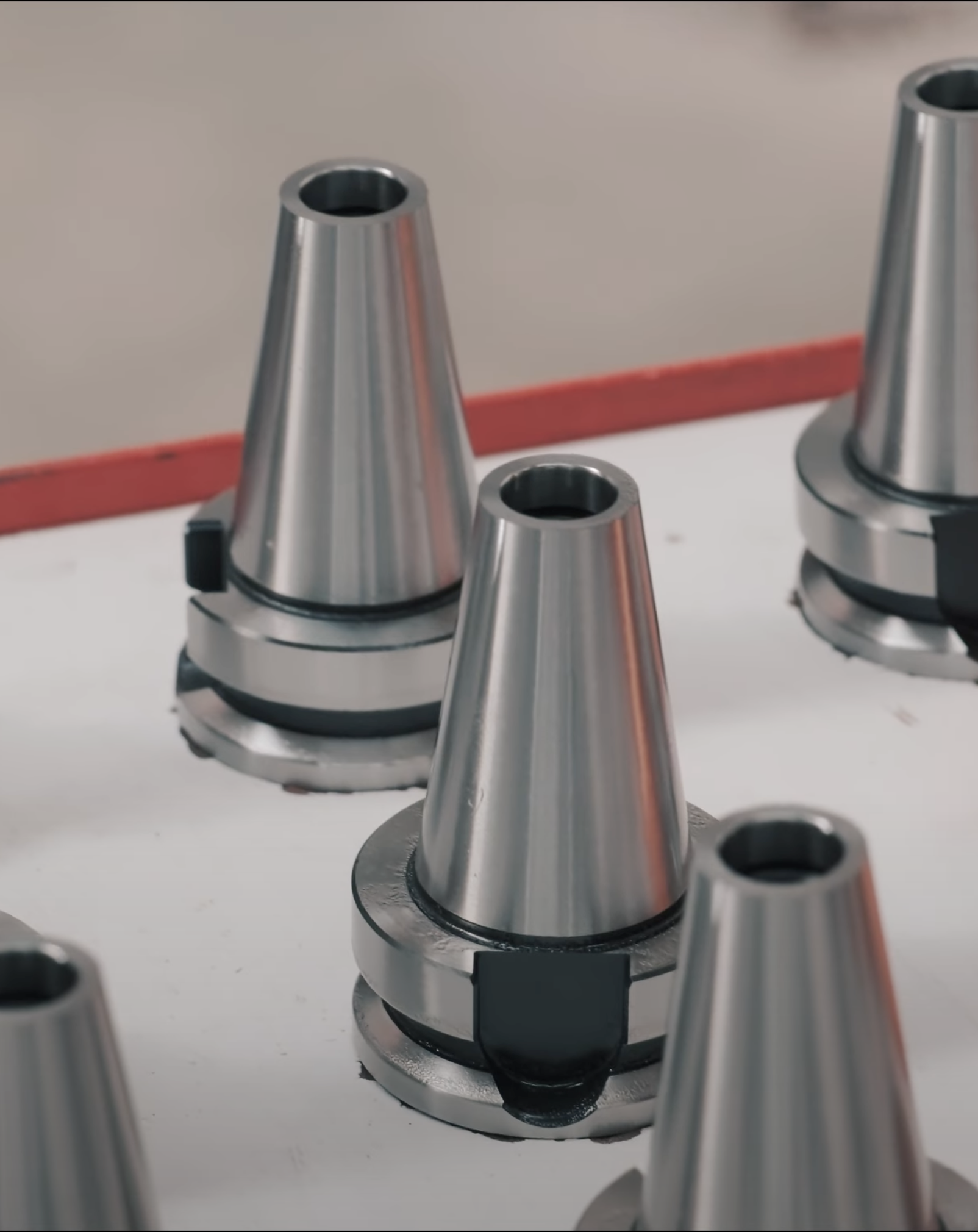
Toolholder selection starts with three questions: what is the machine interface, what is the tool shank diameter, and what operation is planned? Finishing calls for low runout and vibration, rough milling for clamping force, and narrow mould pockets for a slim holder. Here we compare the following TCR TOOLS products: four toolholder types with the HSK63-A interface (hydraulic, shrink-fit, ball-bearing and ER collet chucks) against these requirements.
First published: TCR TOOLS LinkedIn, October 26, 2026 and 7 November 2026 · Expanded version.
Three criteria for choosing a toolholder
The machine interface and shank diameter narrow down the selection. The application determines the final choice:
- Finishing operations: runout and vibration are critical. The centring accuracy of the holder directly affects surface finish and tool life.
- Rough milling: clamping force is critical. At high metal removal rates, the tool must neither rotate nor pull out of the holder.
- Narrow, deep mould cavities: the holder’s outer dimensions matter. A slim body allows access without colliding with the workpiece.
Comparison of four HSK63-A toolholder types
| Holder type | Best suited to | What to check | Tool change |
|---|---|---|---|
| Hydraulic expansion chuck | Rough milling (standard body) and finish milling (thin-walled models) | The shank must meet the tolerance specified for the holder. | Tighten or loosen the clamping screw in the body with a hex key |
| Shrink-fit chuck | Narrow, deep mould cavities and jobs requiring a slim holder | Check the shank tolerance. Heating and cooling equipment is required. | Use heating and cooling equipment suitable for the chuck |
| Ball-bearing collet chuck | Rough milling requiring high clamping force | Large body diameter. Check workpiece clearance in confined areas. | Quick change using a wrench on the nut |
| ER collet chuck | Flexible machining with different shank diameters | Choose a collet suited to the ER series and clamping range. | Change the collet to clamp different shank diameters in the same chuck. |
Hydraulic expansion chuck
Our hydraulic chucks for rough milling hold the tool securely during heavy cuts. To change the tool, release and tighten the clamping screw on the chuck body with a hex key. No additional equipment is needed. Vibration damping in the hydraulic system also helps protect the cutting edge.
Shrink-fit chuck
Slim holders provide access to narrow, deep mould pockets. Heat expands the holder for tool insertion. As the holder cools, it forms an interference fit with the shank. Tool changes therefore require suitable heating and cooling equipment. Mouldmakers often choose shrink-fit holders when they need both a slim profile and low runout.
Ball-bearing collet chuck
Used for rough milling when high clamping force is required. The ball-bearing mechanism in the nut generates high force even when tightened by hand. The relatively large body diameter requires a clearance check in confined areas.
ER collet chuck
One ER chuck can hold several shank diameters by changing the collet within the supported ER series and clamping range. This is useful in job shops with frequently changing tooling lists. Applications requiring maximum rigidity may call for a hydraulic or shrink-fit chuck.
Hydraulic expansion chucks can also be used for finishing
Two points often overlooked when selecting a holder
- Tool length and operating speed: Long tools at high spindle speeds demand tighter control of balance and runout. Select the holder for both requirements.
- Shank tolerance: Hydraulic and shrink-fit chucks in particular require the shank tolerance specified for the model. An out-of-tolerance shank affects clamping force in a hydraulic chuck and the interference fit in a shrink-fit chuck.
Frequently asked questions
What does HSK63-A mean?
HSK is a hollow-shank taper interface. Form A is designed for automatic tool change and through-tool coolant. The number 63 gives the flange diameter in mm. This common interface allows different types of holder to be interchanged on the same machine.
Do I need separate holders for roughing and finishing?
It is optional, but often worthwhile. Roughing prioritises clamping force, while finishing prioritises low runout. A separate slim hydraulic or shrink-fit chuck for finishing can improve surface quality and tool life.
What if standard holders do not suit my operation?
If a standard holder does not suit your operation, contact us about a custom design. Send the workpiece details, the tool you use and the machine interface so we can assess a suitable holder together.
Let us help you select the right toolholder
Share the part you are machining, the tool you are using, and the working conditions with us; let’s select the suitable holder together.
Related pages: Die and mould making solutions · Shoulder milling · ZCC-CT milling inserts