
Indexable or solid carbide end mill? Comparing costs at small diameters with the ZCC-CT EMP11
In small-diameter production milling, retain the body and change only the insert. Compare cost per part for the ZCC-CT EMP11 and a solid carbide end mill.
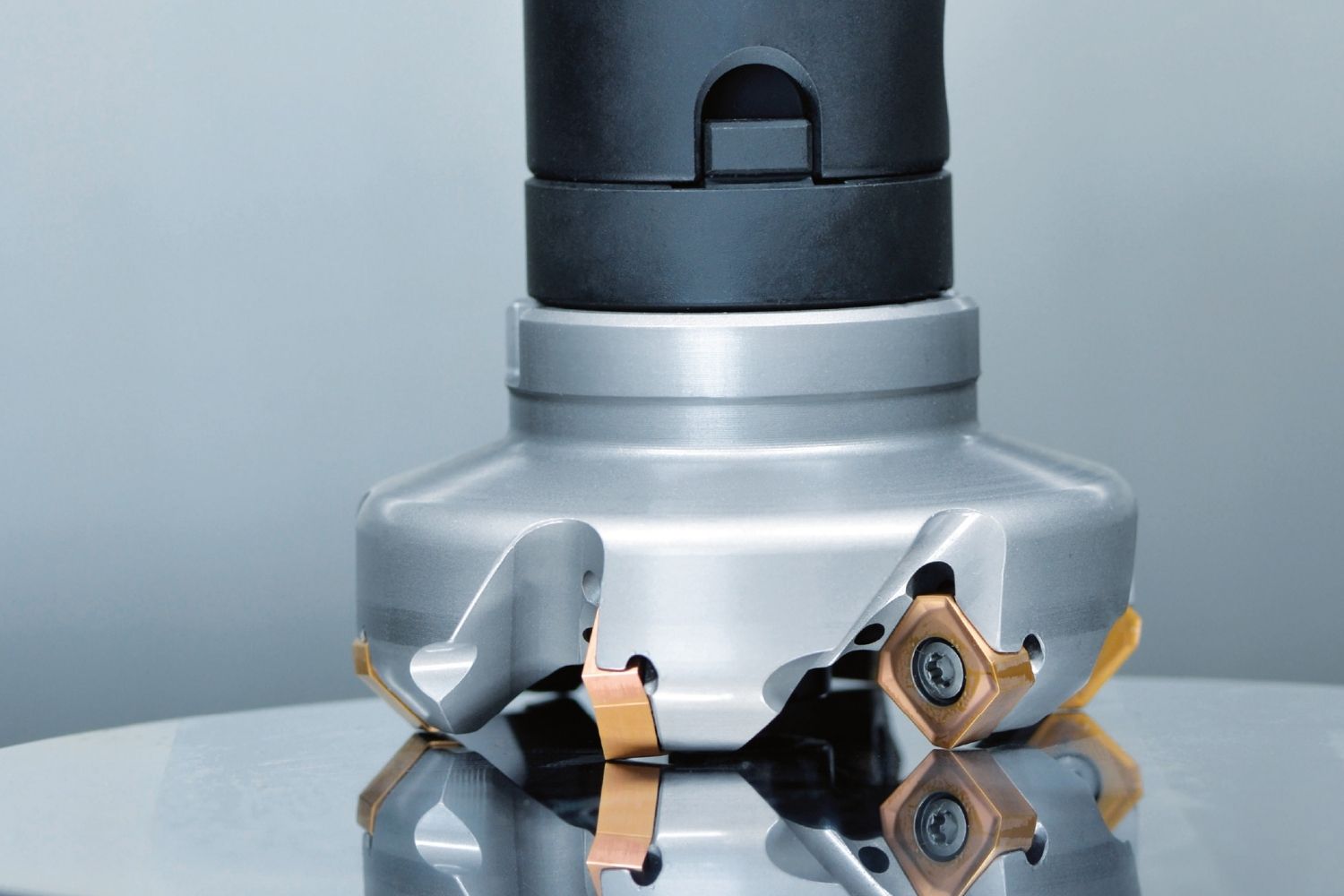
In small-diameter milling the purchase price alone does not determine tool cost. A solid carbide end mill remains suitable for many applications, but the economics change when tool consumption rises in series production. Indexable end mill system retains the cutter body and replaces only the insert. This article looks at ZCC-CT’s Ø6–16 mm EMP11 system with a solid carbide end mill on the basis of actual tooling cost per part.
First published: Toksan Group LinkedIn, 21 September 2026 · Technical data from the ZCC Cutting Tools Europe 09/2026 product innovations brochure.
When is a solid carbide end mill still the right choice?
At small diameters, solid carbide end mills offer rigidity, sharp edges and high surface quality. In one-off work and finishing there is often no equivalent. In series production, a worn cutter needs regrinding and a broken one must be replaced. Replacing the entire carbide body along with its cutting edge increases cost per part. If a shop uses dozens of cutters a month, compare their cost per part rather than the purchase price.
How does the cost calculation change for an indexable end mill?
ZCC-CT (ZCC Cutting Tools) EMP11 series works differently. A small-diameter body carries an indexable insert. When the cutting edge is worn, the body stays in service and only the CVMX insert is replaced. The manufacturer positions these small inserts as an alternative to solid carbide end mills. The body is purchased once and only the insert is consumed.
The ZCC-CT EMP11 system at a glance
| Feature | EMP11 |
|---|---|
| Diameter range | Ø6 – Ø16 mm (6, 8, 10, 12, 14, 16) |
| Cutting insert | CVMX0602 (one insert type, two geometries) |
| Geometries | CVMX-PNR-GM: 90° shoulder milling (Kr 90°) · CVMX-XR-GM: high-feed milling (Kr 18°) |
| Grades | YBG205H (PVD) · YBD252 (CVD) |
| Application range | P10–P30 steel · M20–M40 stainless steel · K20–K35 cast iron |
| Maximum depth of cut | 5.0 mm |
| Number of teeth | 1–6 (depending on diameter: 1 at Ø6, 5–6 at Ø16) |
| Cutter body lengths | S / M / L. For Ø8 and Ø10, long bodies with larger shank diameters (G12/G16) are available. |
| Design | V-shaped, self-centring insert seat for stability, larger core diameter for rigidity, and through-coolant delivery |
Which geometry suits which operation?
- CVMX-PNR-GM — 90° shoulder milling: For work requiring accurate square shoulders, shoulder milling slot walls and pocket walls.
- CVMX-XR-GM — high-feed milling: The 18° entering angle is designed for very high feeds at shallow depths of cut, for pocket roughing and high-feed milling strategies increase the metal removal rate.
Both geometries YBG205H and YBD252 grades can be used for steel, stainless steel and cast iron. Changing inserts in the same cutter body allows a switch from shoulder milling to high-feed roughing.
How do you compare actual tooling cost per part?
Indexable system: (body price ÷ parts over the body’s service life) + (insert price ÷ parts per insert)
Compare both systems in the same unit: tool cost per part. For solid carbide, include the number of regrinds and the change in tool life after each. For indexable tooling, account for how many insert changes the body withstands. Example using hypothetical figures:
| Cost item | Solid carbide end mill | EMP11 indexable end mill |
|---|---|---|
| Investment | Tool: 100 units | Cutter body: 250 units (long service life) |
| Consumables | 2 regrinds × 35 units | Insert: 20 units |
| Tool life | 900 parts in total (new tool + 2 regrinds) | 300 parts per insert; body lasts for 30 insert changes |
| Per part | 170 ÷ 900 = 0.19 units | 250 ÷ 9000 + 20 ÷ 300 = 0.03 + 0.07 = 0.10 units |
These figures illustrate the method. Enter your own prices and actual part counts, and either system may come out ahead. Frequent breakage quickly increases solid carbide costs. For short or one-off jobs, the cost of an indexable body may not be recovered.
Should EMP11 replace a solid carbide end mill in every application? No.
- Where a solid carbide end mill remains the better choice: Diameters below Ø6, finishing passes requiring a high surface quality, single-pass grooves deeper than 5 mm, and one-off or small-batch jobs.
- When to include EMP11 in the comparison: Regular, high consumption of milling cutters in the Ø6–16 range, shoulder and pocket milling, interrupted cuts with a risk of breakage, and production lines requiring quick edge changes.
If small-diameter cutters are consumed regularly, compare the actual tool cost per part for both systems. Replacing only an insert rather than a complete cutter can substantially change that calculation.
Frequently asked questions
Which materials is EMP11 suitable for?
The manufacturer lists steel (P10–P30), stainless steel (M20–M40) and cast iron (K20–K35). The YBG205H PVD grade is especially suitable for heat-resistant applications, while the YBD252 CVD grade is particularly suited to work focused on cast iron.
What is needed to change an insert?
A screw secures each insert (screw I60M1.8*3.3TT, tightening torque 0.4 Nm, wrench WT06IP). Replace the insert at the machine without removing the cutter body.
Does regrinding change the calculation for solid carbide?
Yes. Regrinding typically costs around 30–40% of the price of a new tool, and each regrind extends its usable life. For a detailed calculation, see when does regrinding carbide tools pay off? in our article.
Compare cutter consumption for your operation
We can compare both systems for your operation. Send us the cutter diameter, workpiece material, monthly consumption and current tool life.
Related pages: Milling tools · EMP09 series · 2026 catalogues · Adhesion and burr formation when milling aluminium