
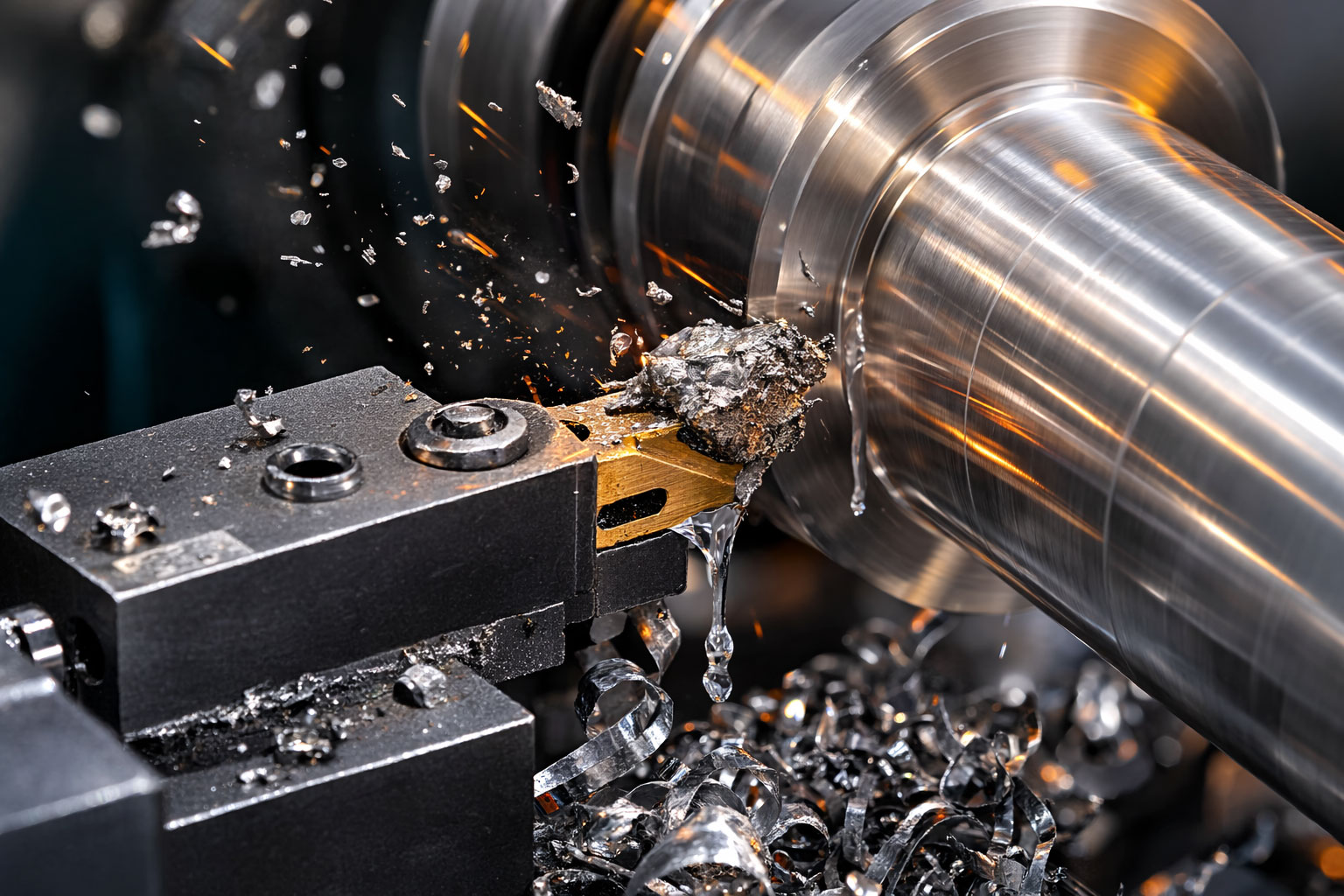
🚀 Why is adhesion so common when machining stainless steel?
Several material properties make stainless steel difficult to machine. Its high ductility makes chips hard to break, so it tends to produce long, tough, continuous chips. Austenitic grades in particular are also prone to work hardening: part of the surface hardens as the cut progresses. Because thermal conductivity is low, more heat remains at the tool surface than when cutting carbon steel. Together, these effects favour the build-up of workpiece material on the cutting edge. Seco’s notes on machining stainless steel and Sandvik’s material classification particularly emphasises the interaction between heat, deformation and work hardening.
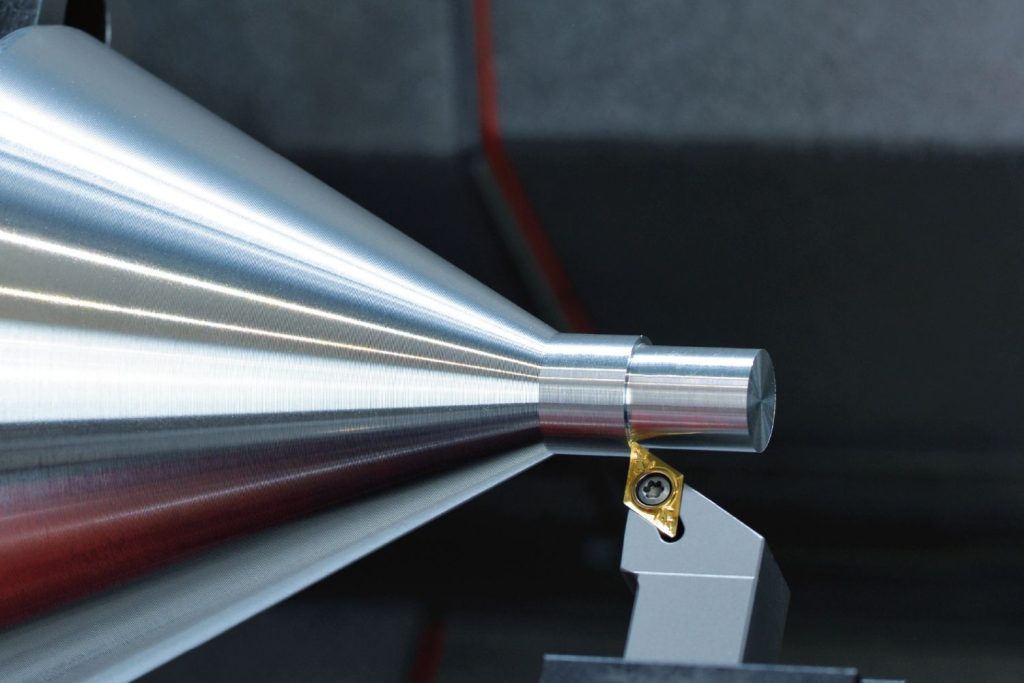
Here is how I picture it 😊 Stainless steel is almost too friendly with the tool. As you try to cut it cleanly, it clings to the edge as if to say, “Take me with you.” If the geometry is too blunt, the feed too light to break the chip, or the heat gets out of control, that close contact soon leads to a built-up edge. That is why Toksan illustrates an application-based approach that considers the loads throughout the process alongside catalogue data.
⚖️ Why does adhesion occur less often in carbon steel than in stainless steel?
Carbon steel can also adhere to the edge, but the effect is often stronger in stainless grades. Some are more ductile, conduct less heat and work-harden more readily. Heat and chip flow are often more predictable in carbon steel. In stainless steel, the balance at the cutting edge is more easily upset. Lowering both speed and feed may seem to protect the finish, but the tool can start rubbing. That is just when a built-up edge can form 😕 Seco notes that built-up edge can occur particularly at lower cutting speeds and feeds, while Sandviknotes that higher cutting speeds and sharp geometries can reduce adhesion when turning stainless steel.
| Factor | Carbon steel | Stainless steel | Effect on built-up edge (BUE) |
|---|---|---|---|
| Thermal conductivity | Better | Lower | Heat builds up at the cutting edge 🔥 |
| Work hardening | Lower | Higher | The next pass becomes more difficult |
| Ductility | Relatively low | Higher | Chips are more likely to adhere |
| Chip breaking | Easier | More difficult | Chip flow can encourage built-up edge formation |
| Tolerance to changes in cutting parameters | Wider | More sensitive | Poor parameter choices cause problems sooner |
💡 7 main causes of built-up edge formation
The first cause is low cutting speed. Operators often lower the cutting speed to protect the finish. In stainless steel, an excessively low speed can encourage material to build up on the edge. The second cause is an unsuitable geometry. A geometry that is insufficiently positive, too coarse or no longer sharp drags the material instead of cutting it cleanly. The third cause is incorrect feed and chip thickness. An excessively light feed can cause rubbing, especially when finishing. The fourth cause is insufficient rigidity. Vibration of the tool, holder or workpiece accelerates the cycle of microscopic adhesion. The fifth cause is an unsuitable cooling strategy. Where and how the coolant reaches the cutting zone matters as much as the quantity supplied. In some applications, precisely directed coolant reduces built-up edge formation. In others, an excessively low temperature or an unsuitable fluid can increase adhesion. The sixth cause is an unsuitable grade and coating. The seventh cause is recutting chips. If chips fail to leave the cutting zone cleanly, material keeps collecting on the edge. In production, these factors reinforce one another.
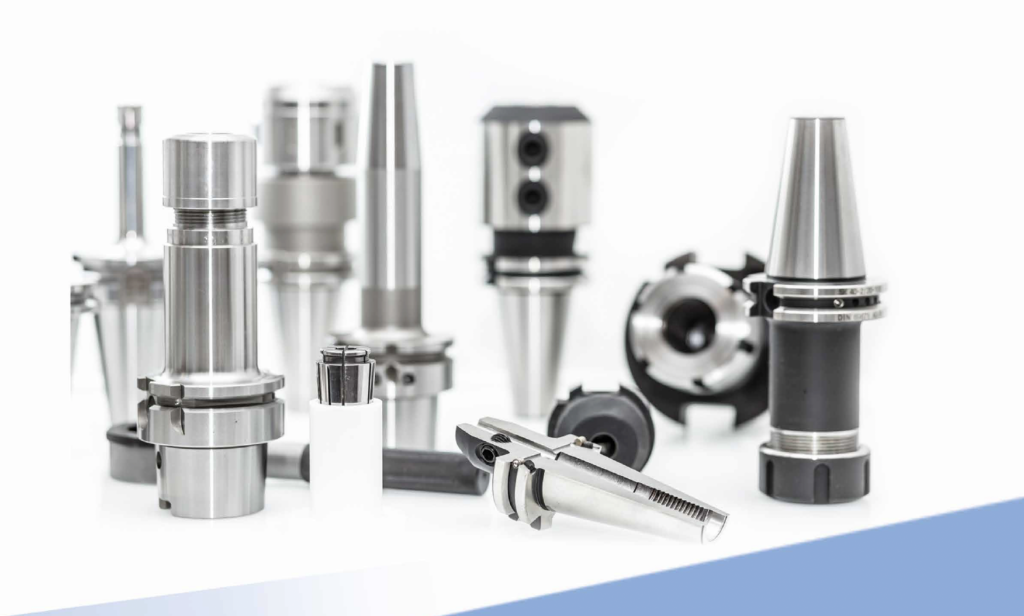
At this point, Toksan in the product range inserts for machining stainless steel, turning systems, tooling technology and rigid toolholding systems should therefore be considered together. A high-quality insert needs a toolholding system of matching quality.
🧩 How built-up edge forms

Low cutting speed / unsuitable geometry / poor chip flow ↓ More rubbing, less cutting ↓ Workpiece material adheres microscopically to the edge ↓ The deposit grows and becomes irregular ↓ Material breaks away and adheres again ↓ Poor finish, dimensional variation, edge breakage and shorter tool life
Example: Consider a 304 stainless steel shaft with a low target Ra. To protect the finish, the operator reduces the cutting speed too far. The first few parts look acceptable, but after the fifth a shiny, wavy mark appears. Removing the insert reveals a bright deposit of workpiece material on its edge. The insert itself may be perfectly sound. The cutting temperature, chip thickness and geometry are working against one another. In applications like this, Toksan the most effective approach is often to testing and validation of special tools alongside optimisation of the cutting parameters.
I have seen this many times. 🙂 An experienced machinist lowers the speed to protect the finish until the tool does little more than rub the surface. Stainless steel reacts quickly. Once the surface has work hardened and a built-up edge has formed, one poor pass follows another. This is why Toksan the aim is a stable, controlled cut that delivers the required finish without making the edge rub.
Practical ways to prevent built-up edge ✅
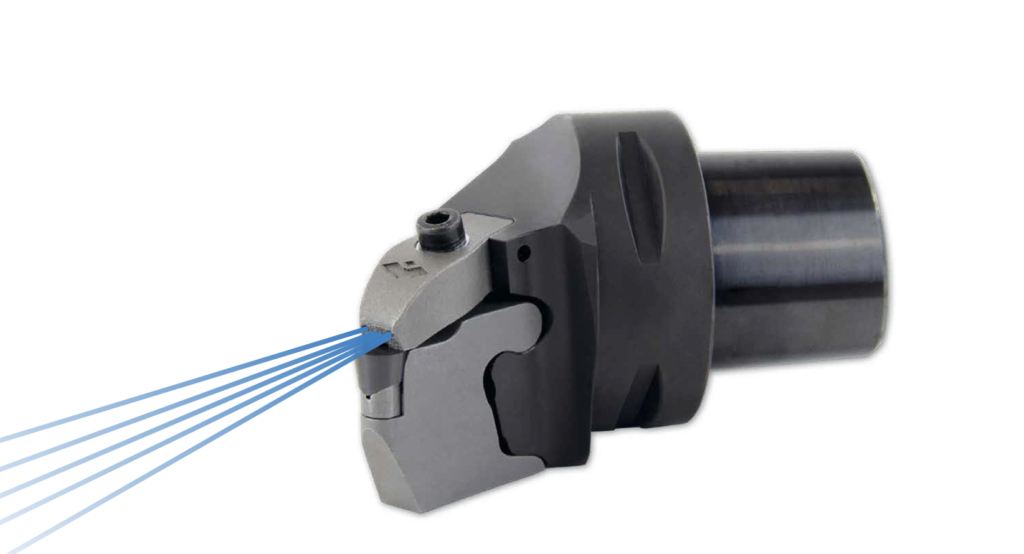
1. Adjust cutting speed deliberately, without being overly cautious. Very low speed is a classic trigger for built-up edge formation. 2. Use a sharper edge with positive geometry. A sharp edge reduces friction. 3. Use sufficient feed. An overly cautious feed often gives poor results, especially in stainless steel. 4. Choose a suitable grade and coating. The coating has a significant effect on friction and adhesion. 5. Ensure a rigid setup. Toksan in the area of precision toolholders and tooling systems are therefore particularly important. 6. Apply coolant in a controlled manner. Precisely directed coolant is useful in many cases. Choose a strategy that maintains a suitable temperature balance for the operation. 7. Prevent chips from being recut. Poor chip evacuation soon affects the finish and tool life. 8. Machine a test piece before starting series production. Toksan process reliability starts with the very first part.
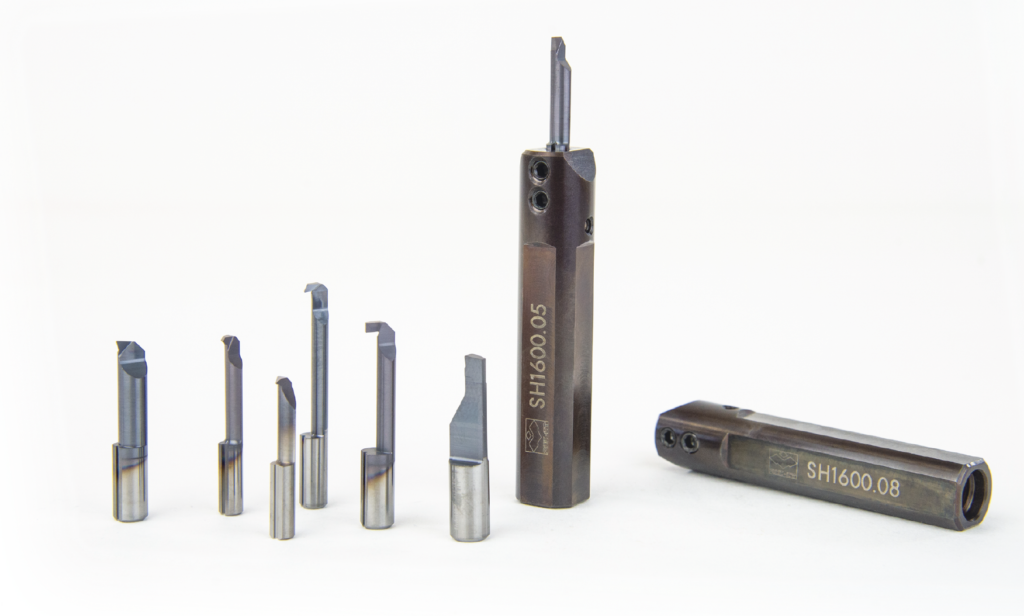

There is a human side to this as well. 😊 Few things are more tiring for a machinist than seeing the same problem every day without understanding it. A built-up edge can appear in different ways: a spoiled surface, a broken insert or a dimension out of tolerance. Those symptoms can have the same root cause, so they should be investigated together. Toksan can act as a technical partner who understands how the process behaves and recommends products accordingly. In particular, applications with demanding surface finish requirements and on precision parts, where the difference is particularly noticeable.
Frequently asked questions ❓
- What exactly is a built-up edge?
Part of the workpiece material sticks to the cutting edge and forms a temporary layer. - Why is it more common in stainless steel?
Because of its low thermal conductivity, high ductility and tendency to work harden. - Does reducing the cutting speed reduce built-up edge (BUE)?
Not always. Excessively low cutting speeds can make built-up edge worse. - Why does a sharp geometry matter?
It helps the edge cut the material cleanly without rubbing. - Can coolant alone always solve the problem?
No. The coolant must suit the application and reach the right point in a controlled manner. - Which is better, PVD or CVD?
That depends on the workpiece material, operation and objective. - Can the toolholder really make that much difference?
Yes. Low runout and high rigidity reduce the risk of built-up edge. - Why does chipbreaker selection matter?
It directs chip flow and reduces the risk of adhesion and chip recutting. - Can a sudden deterioration in surface finish indicate built-up edge?
Yes. A shiny surface with a torn appearance is a strong sign. - How do you find a lasting solution?
By optimising the tool, holder, geometry, cutting speed, feed and cooling together.
Related questions 🔎
- Which type of tool wear is most common when turning 304 and 316 stainless steels?
- Is a low feed always right for finishing stainless steel?
- Can high-pressure coolant really reduce built-up edge?
- How are work hardening and built-up edge formation related?
- What causes a wavy surface when turning stainless steel?
- What does a shiny layer of metal on the insert indicate?
- How much does a rigid toolholder affect tool life?
- Which chipbreaker geometries are more reliable in stainless steel?
- How does coating choice affect adhesion?
- How can built-up edge be monitored efficiently in series production?
In summary 🌟 Built-up edges in stainless steel turning are a predictable result of the interaction between material behaviour and process choices. A well-matched combination of cutting speed, geometry, holder, coolant delivery and cutting tool can bring the problem substantially under control. This is why Toksan the aim is to remove material in a stable, clean and repeatable process. The most effective way to tackle built-up edge (BUE) is to control the conditions that cause it before deposits form. 🙌