HSK-A63 ER collet chucks: design, advantages and when to use them
Hollow-shank taper and ER collet: how the HSK-A63 ER collet chuck works, its benefits and selection criteria.
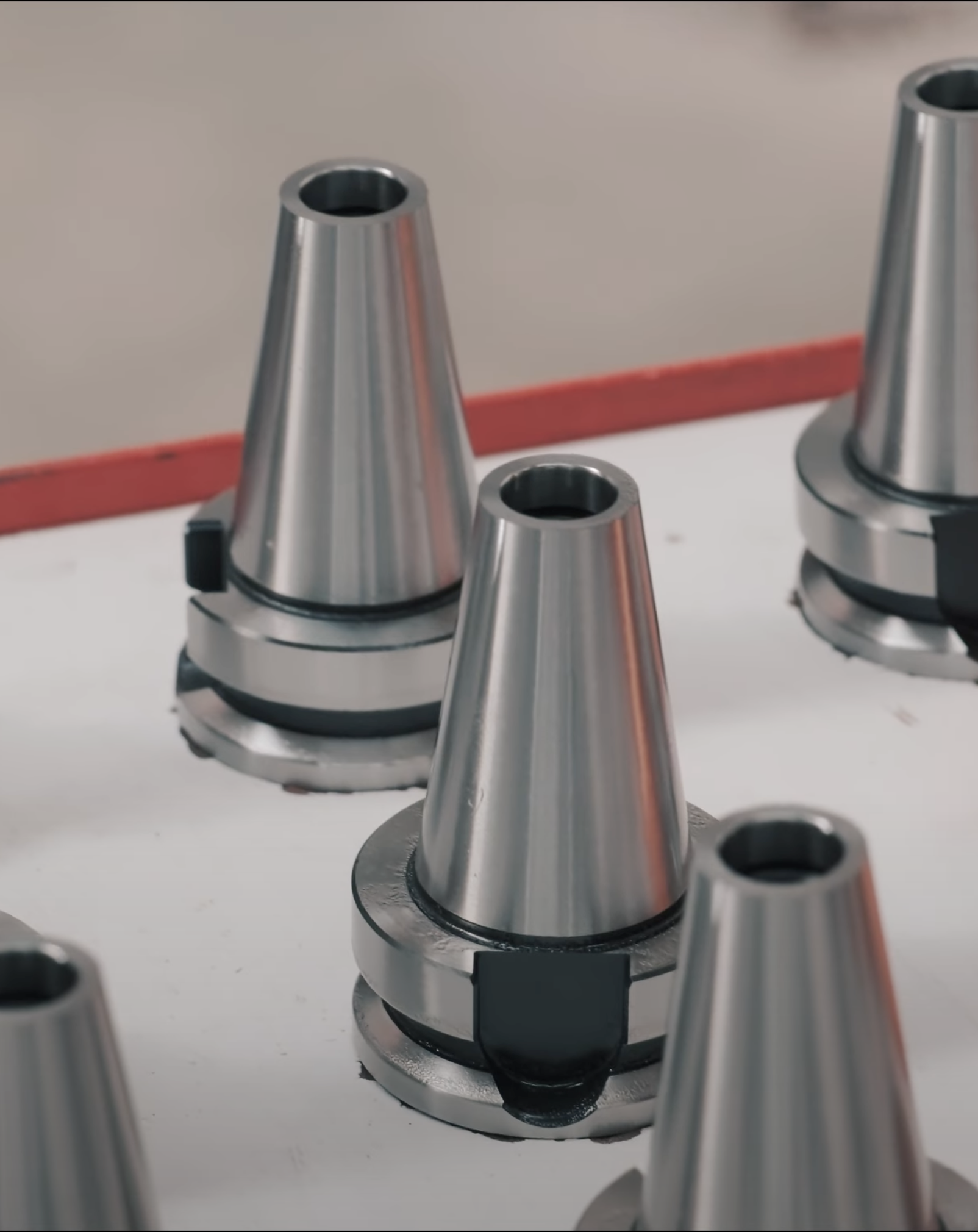
HSK-A63 ER collet chuckis used on machine tools, particularly in roughing operations. It clamps cutting tools rigidly and precisely, and one chuck accommodates different shank diameters with the appropriate collets. This makes it common in industrial production. This article explains the interface (HSK-A63) and ER collet clamping, their benefits and selection criteria.
First published: TCR TOOLS LinkedIn, 22 May 2024 · Expanded edition.
What does HSK-A63 mean?
HSK, short for Hohlschaftkegel, is a hollow-shank taper interface defined in DIN 69893 and ISO 12164. Unlike a conventional SK/BT steep taper, both the taper and the holder face contact the spindle. This dual contact provides axial positional stability and rigidity at high speeds. The code means:
- Form A: the standard form for automatic tool changing, with through-coolant delivery and face drive slots. It is the most common form on machining centres.
- 63: denotes the interface size, with a flange diameter of 63 mm. The same family includes sizes 32, 40, 50, 63, 80 and 100.
ER collet system
ER collets (DIN 6499 / ISO 15488) are widely used for their rigidity and reliable grip across a range of shank diameters. As the nut is tightened, it pushes the slotted collet into its taper, gripping the shank around its circumference. Each collet can clamp down to about 1 mm below its nominal diameter, so a small set covers a wide range. For example, ER32 series covers shank diameters of approximately 2–20 mm.
Why choose an HSK-A63 ER collet chuck?
| Benefit | Description |
|---|---|
| Flexibility | Use drills, taps and end mills of different diameters in one chuck by changing the collet. |
| Rigid clamping | HSK-A63provides dual contact, and the collet grips all around the shank. Both help limit vibration. |
| Tool change | At the machine using a nut wrench, without additional equipment |
| Cost | Collets are inexpensive consumables, while the chuck is a long-term investment. |
Selection and application notes
- Select the collet for the tool’s exact shank diameter . Working near the lower limit of the clamping range reduces grip.
- Tighten the nut to the manufacturer’s specified torque. Overtightening can deform the collet and its seat. Insufficient torque can allow the tool to rotate.
- Clean the taper seat and collet surfaces at every change. Fine chips are a frequent cause of runout.
- Measure runout at high spindle speeds and long tool overhangs. If a finishing operation requires lower runout, consider a hydraulic expansion or shrink-fit chuck as an alternative.
Frequently asked questions
How do HSK-A63 and HSK-E63 differ?
Form E is rotationally symmetrical, has no drive-key engagement and is designed for high speeds. Form A has face drive features, an automatic tool-change groove and through-coolant delivery. Choose the form specified for the spindle. They are not interchangeable.
Is an ER collet chuck adequate for rough milling?
Yes, for medium-duty machining and most roughing. For heavy rough milling requiring very high clamping force, a power milling chuck with a ball-bearing mechanism or a hydraulic expansion chuck is a more secure choice.
Which ER collet series should I choose?
Select according to the range of tool shank diameters: ER16 for small diameters, ER32 for general use (approximately 2–20 mm) and ER40 for large diameters are common choices.
Select a chuck and collet set for your spindle and shank diameters
Send us the spindle type and tool shank diameters so we can select a suitable HSK-A63 chuck and collet set together.
Related articles: HSK63-A toolholder selection guide · BMT65 turrets and axially driven tooling